Karnak Temple: Tracing Ra's Solar Journey Through Stone
"To walk through Karnak is to walk through the very timeline of the gods, where every stone was laid to catch the light of a rising sun."
The Karnak Temple Complex is not just a collection of ruins; it is a massive, stone-carved map of the Egyptian universe. For millennia, pharaohs added pylons, obelisks, and halls to this site, turning it into the ultimate expression of divine power.
* Karnak serves as a physical representation of the solar journey of the god Ra. * The complex evolved over centuries through the continuous dedications of various pharaohs. * Sacred geometry and architectural layout mirror ancient Egyptian cosmological beliefs. * It stood as the central religious heart of the New Kingdom during the height of Thebes.
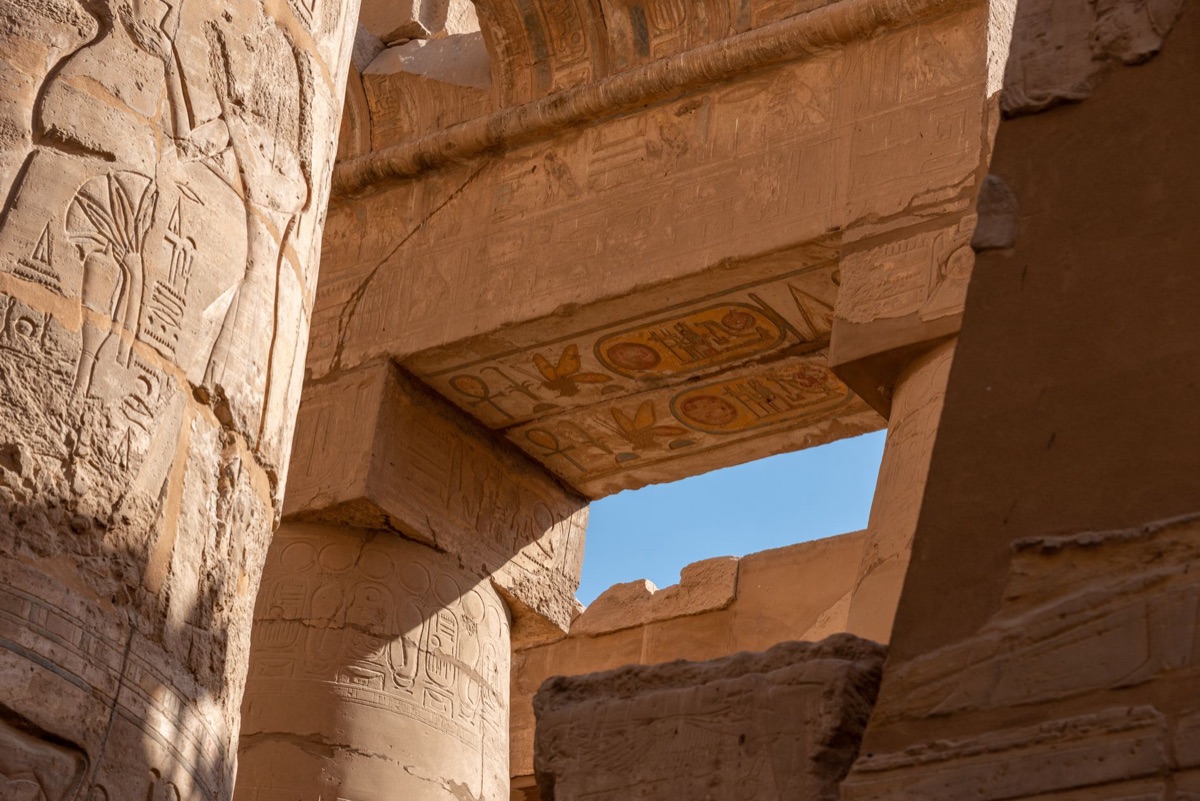
What was this sanctuary dedicated to Amun-Ra? The morning sun hits the massive sandstone pylons of Karnak at 6:30 AM, casting long, sharp shadows that stretch across the courtyard like the fingers of a giant. As you step through the entrance, the sheer scale of the walls makes you feel as though you have entered a different dimension of time.
Karnak was primarily the principal cult center for the Theban Triad: Amun, Mut, and Khnum. While many temples exist across Egypt, this was the spiritual engine of the nation, specifically dedicated to Amun-Ra, the king of the gods who represented the culmination of the solar cult.
Unlike a single building designed by one architect, Karnak is a sprawling accumulation of devotion. It was built, expanded, and modified by successive dynasties over a period of more than 1,500 years.
The scale of this devotion is staggering. Because it was a living site of worship, every pharaoh felt the need to leave their mark to secure their place in the afterlife. This resulted in a complex that grew organically, merging various architectural styles into one massive religious landscape.
While modern travelers often visit various sites, such as the Great Pyramids of Giza located 20 km southwest of Cairo, Karnak offers a different kind of magnitude—one of continuous, layered history rather than a single moment in time.
When I first stood at the base of the entrance in the summer of 2025, the heat was already rising to 38 degrees Celsius, making the sheer weight of the stone feel almost palpable. It wasn't just a building; it was a mountain of history.
But how did they manage to organize such a massive construction project over so many centuries?
How was the temple a cosmic journey for Ra's barge?
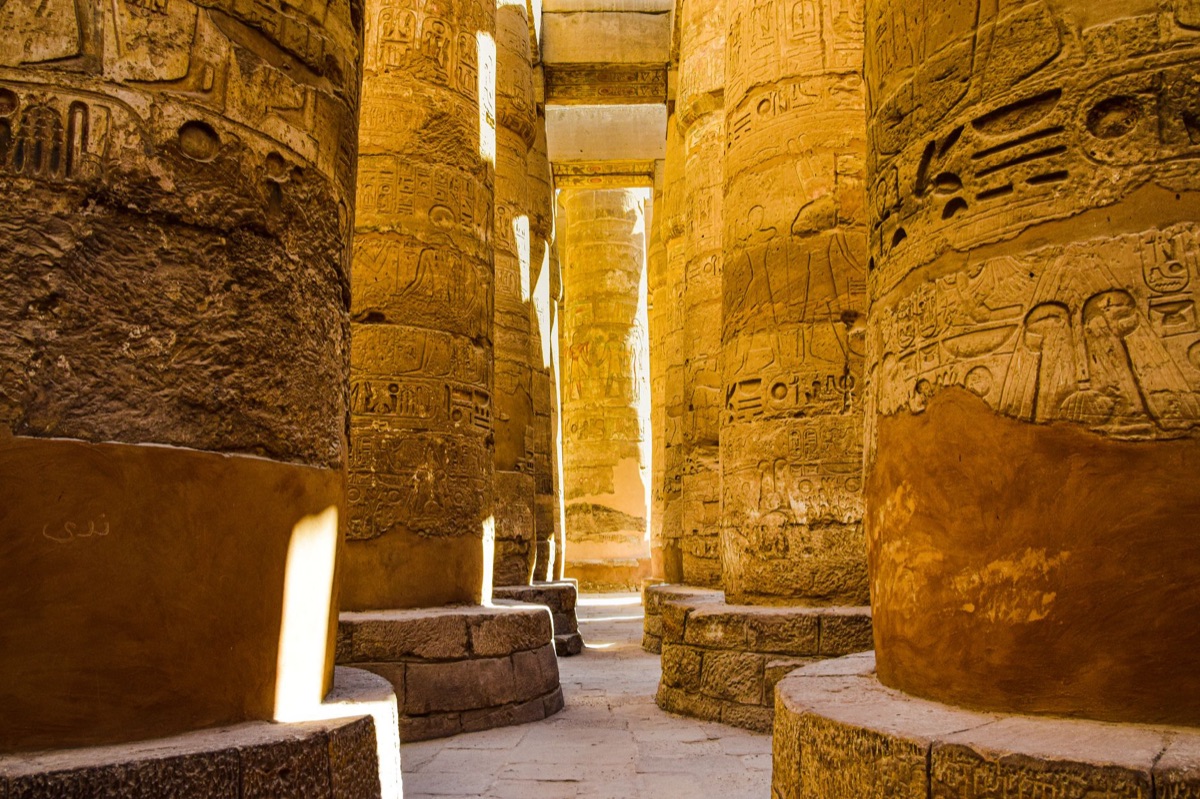
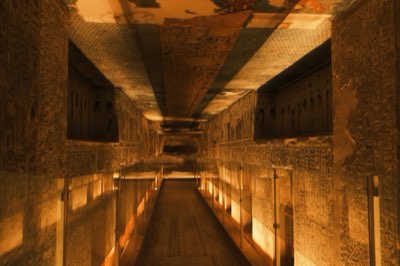
Walking through the central axis of the temple at 9:00 AM, you notice how the floor rises and the ceilings lower as you move deeper into the sanctum. The transition from the bright, open courtyards to the dim, cramped inner chambers feels like a deliberate descent into the mysteries of the earth.
The layout of the temple was designed to mirror the daily cycle of the sun god, Ra. The progression from the outer gates to the inner sanctuary represents the transition from the light of the living world to the darkness of the primordial origins.
The Great Hypostyle Hall, one of the most famous structures in the complex, serves as a profound architectural metaphor. Its massive columns, topped with lotus-shaped capitals, represent a stone forest of the primordial marshland that existed at the beginning of creation.
The procession route was carefully planned to facilitate the movement of the gods. As the sun moved across the sky, the light would strike specific obelisks or sanctums at precise moments, simulating the solar journey.
This alignment ensured that the temple acted as a cosmic machine, maintaining the balance of *Ma'at* (truth and order) through the ritualized movement of light and shadow.
The sheer complexity of the alignment is enough to make your head spin, but there is a deeper level of engineering at play.
Architectural Echoes: Pharaohs' Legacies Etched in Stone
Standing beneath a massive obelisk at midday, you look up at the polished granite and realize that each stone was moved by thousands of workers under a command that felt absolute. The heat of the Egyptian sun reflects off the stone, making the carvings of gods and kings seem to shimmer with life.
The architecture of Karnak is a testament to the individual legacies of pharaohs. Each ruler sought to outdo their predecessors by adding new halls, massive pylons, or towering obelisks. This constant expansion created a unique architectural tension between the old and the new.
While some pharaohs focused on massive scale to project power, others focused on intricate craftsmanship and hidden sanctuaries.
The engineering required to move these monoliths was nothing short of miraculous. To transport massive granite blocks from quarries hundreds of miles away, the Egyptians utilized the Nile and sophisticated sled systems. These dedications were not just about ego; they were theological statements.
By adding a new hall or a massive pylon, a pharaoh was essentially expanding the "home" of the god, ensuring that their own name would be eternally linked to the divine presence.
However, the sheer density of the site can be overwhelming for a visitor trying to find a single narrative.
Beyond the Main Hall: Rituals and Sacred Spaces
The air grows cooler and more still as you approach the innermost sanctum at 11:30 AM, where the light of the sun can no longer reach. You find yourself walking on uneven stone, mindful of the heavy silence that hangs in the air like a physical weight.
The heart of the temple was the sanctuary, the most sacred area reserved for the god's manifestation. This was the "Holy of Holies," where only the highest priests and the pharaoh could enter to commune with the deity. The rituals performed here were designed to sustain the universe itself.
Key elements of the ritual landscape included:
- The Sacred Lake: Used for the ritual purification of priests before they entered the presence of the god.
- The Processional Path: The route taken during great festivals when the statues of the gods were carried in golden barques (boats).
- The Sanctuary: The ultimate destination of the solar journey, representing the point of creation.
These spaces were designed to transition the human soul from the mundane to the divine. The movement from the wide-open courtyards to the tiny, dark sanctums mirrored the journey of the soul through the underworld to be reborn in the light.
But why did this massive complex become so central to the empire's survival?
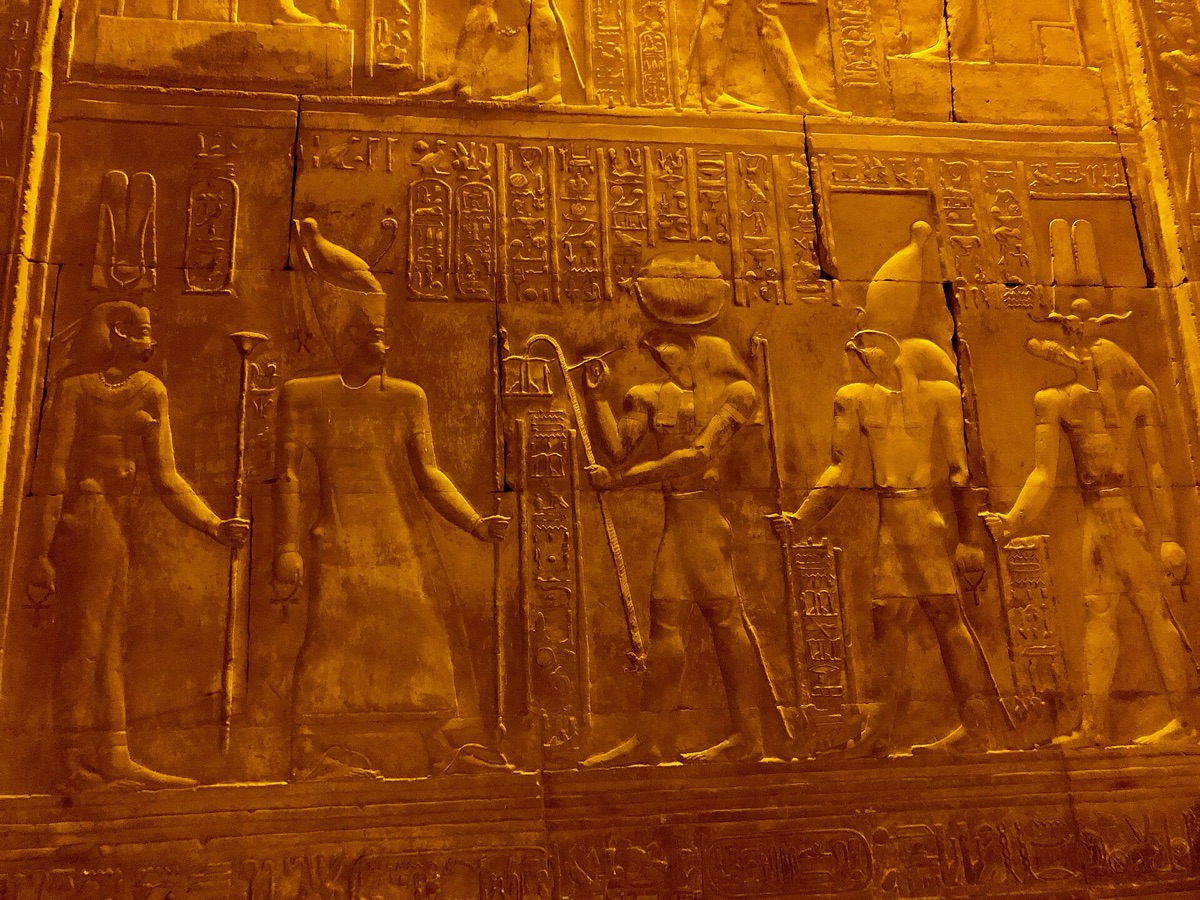
Karnak in Context: Thebes and the Rise of New Kingdom Power
Looking out from the temple walls toward the distant Nile at dusk, you see the green ribbon of life cutting through the desert. In ancient times, this view would have been framed by the bustling city of Thebes, the political and religious heart of the empire.
According to World Bank, Egypt recorded international tourist arrivals of 13,026,000 in 2019.
Karnak was the centerpiece of Thebes, which was located about 500 km south of Cairo. During the New Kingdom, the cult of Amun-Ra reached its zenith, and the wealth and power of the priesthood became a central force in Egyptian politics.
The temple was not just a place of prayer; it was a massive economic engine that controlled vast tracts of land, gold, and labor.
The relationship between the temple and the Nile was symbiotic. The river provided the lifeblood of the civilization, and the temple provided the spiritual legitimacy that kept the civilization running.
This connection between the natural cycle of the Nile and the divine cycle of the sun created a powerful theological framework that unified the Egyptian state for centuries.
| Feature | Purpose | Symbolic Meaning |
|---|---|---|
| Pylons | Entrance Gates | The horizon where the sun rises |
| Hypostyle Hall | Gathering Space | The primordial marsh of creation |
| Obelisks | Solar Markers | Rays of the sun reaching toward earth |
| Sacred Lake | Purification | The waters of life and rebirth |
How to Navigate the Complex Like an Insider
To make the most of a visit, you cannot simply wander aimlessly through the heat. I found that following a structured path helps prevent exhaustion and ensures you don't miss the subtle transitions in architecture.
- Start at Sunrise: Arrive at the gates by 6:00 AM to experience the light hitting the pylons without the midday heat.
- Walk the Axis: Follow the central path from the outer gates toward the inner sanctums to understand the cosmic journey.
- son
- Visit the Sacred Lake: Walk the perimeter of the water to experience the cooler microclimate and the stillness of the site.
- End at the Obelisks: Position yourself near the large obelisks in the late afternoon to see how the shadows shift against the stone.
It is important to note that while the scale is grand, the site can be physically demanding. The uneven stone floors and high temperatures mean that those with mobility issues or sensitive health should plan for frequent breaks in the shaded areas.



Comments 0